This Montana Landscape Turns Into a Serene Frozen Wonderland During Winter
One of Montana's many year-round glaciers, this icy ancient wonder is surprisingly easy to see.
Winter in Glacier National Park is a world apart. The throngs of summer visitors are gone, the tourist crowds a distant memory, and the park is left to its quiet, winter self. In this frozen, storybook-like realm, snow blankets the jagged peaks, the deep valleys, and the sprawling forests, transforming the landscape into something straight out of a Rocky Mountain snow globe.
While most people think of visiting GNP as a summer activity — an alpine paradise full of wildflowers, gorgeous hiking trails, and crystal-clear lakes — Montana in winter offers a completely different view. It’s stark, serene, and beautifully unkempt, where the landscape takes on a silence that feels ancient because ... well, it is!
Amidst this winter wonderland, Jackson Glacier stands as a stunning point of interest — one of Glacier National Park’s most accessible glaciers, yet one that feels entirely remote when shrouded in snow and ice. As the park quiets down in the colder months, Jackson Glacier remains an almost secretive gem, hidden in plain sight, just waiting for the intrepid to venture into the deep winter wilderness.
Located just off the Going-to-the-Sun Road, one of America’s most iconic drives, Jackson Glacier offers a front-row seat to the park's breathtaking geological drama. The glacier, spanning around 200 acres, sits at around 7,500 feet, with ice thickness reaching up to 500 feet in places. While it’s not the largest glacier in the park, it’s one of the most straightforward to experience — and its proximity to the road makes it a perfect stop for those with limited time or hiking background.
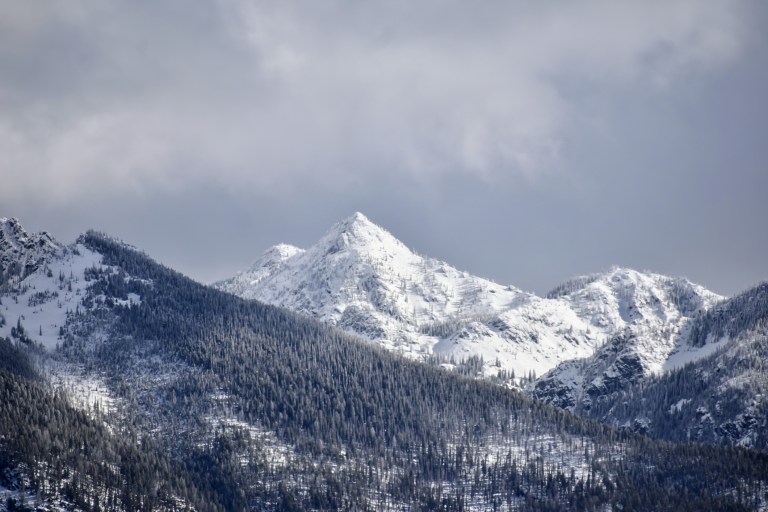
At first glance, Jackson Glacier might seem like just another patch of ice in a park known for its rugged beauty and other equally large patches of ice, but it's so much more. It’s actually one of the few glaciers that’s still visible and accessible to the public without a mountaineering pass, and one of only 25 active glaciers remaining in the park. For the casual observer, the Jackson Glacier Overlook offers an impressive view. Seriously impressive.
From here, you can get a good look at the glacier’s ice mass, which has been slowly receding for over a century, tucked away in the Jackson Glacier Basin at the base of Mount Jackson. One of the prominent peaks in Glacier National Park, Mount Jackson stands at 9,400 feet, towering above the glacier, its slopes helping to shape the terrain around the glacier.
The glacier flows down from the higher reaches of the mountain, spreading out across the basin below. It’s the glacier's location at the head of this basin that makes it so visually striking — especially when viewed from the Jackson Glacier Overlook or from the Jackson Glacier Trail. The proximity to Mount Jackson makes it a great example of how glaciers carve out the land, with the surrounding rock formations and cliffs showcasing the dramatic effects of glacial erosion.
The bright blue of the ice contrasts sharply with the surrounding rocky cliffs and alpine meadows, creating a scene that feels like a snapshot from a geologist’s dream. But this roadside overlook is only the beginning.

Although the Going-to-the-Sun Road, where the overlook is located, closes in mid-September, winter still offers a rare opportunity to experience the glacier without the usual crowds or distractions. For an even deeper connection with this ancient frozen wonder, lace up your snowshoes and hit the always-gorgeous Jackson Glacier Trail.
The Jackson Glacier Trail is a relatively challenging 13-mile round trip, with a steep but steady incline through brushy terrain that offers a good balance of challenge and reward. As you hike, the scenery transforms from dense forest to sweeping alpine vistas. You’ll pass through shaded patches of trees, cross babbling and/or iced-over streams, and climb gradually toward the glacier itself. The maintained trail ends before the glacier, but there are options to continue on with caution.
With each step, the landscape opens up, and when you finally reach the base of the glacier, you’re met with an overwhelming sense of scale that you would ordinarily miss through casual roadside observation. The deep blue of the ice seems almost unnatural, and the cliffs surrounding the glacier feel as though they’ve been carved by giants.
It’s easy to get lost in the stillness of the park. These larger-than-life wonders aren't just beautiful, they're in perpetual motion, but in such a slow, deliberate way that you definitely won't notice the gradual retreat. And yet, this fantastic frozen formation is still just a young feature! Jackson Glacier's ice has only been around since the Little Ice Age, approximately 1000 years ago, and while it's shrinking due to climate change, it’s still an awe-inspiring sight. As you stand there, it’s easy to forget that the ice beneath you is a living thing — constantly shifting, cracking, and eroding the landscape. Nearby, waterfalls tumble from jagged cliffs, many frozen themselves, a reminder that even in places as cold as this, water is never too far behind.

Visiting Jackson Glacier in the summer is easy enough — temperatures are manageable, and the trail is well-marked — but what about in winter? That’s when the park really shows its rugged (and dangerous) side!
When the Going-to-the-Sun Road closes in mid-September, with it, so too does access to the Jackson Glacier Overlook and trail. That doesn’t mean the glacier is completely off-limits, though. Winter access to the trail is still possible, but it comes with a few extra challenges and risks that require advanced planning and careful packing. The road will likely be snowed in, making it more difficult to reach by car. If you’re determined enough, you’ll need to rely on cross-country skis or snowshoes to get closer to the trailhead. While this means a longer and more demanding journey, it also means you'll likely have the place to yourself — no crowds, no noise — just the quiet crunch of snow beneath your feet and the distant creak of glaciers shifting in the cold air.
Winter hikers to Jackson Glacier will be rewarded with an entirely different experience: the glacier’s icy expanse, blanketed in snow, has a serene, almost otherworldly quality. The cold air, the stark white landscape, and the sound of snow crunching underfoot create a sense of isolation that’s hard to find in the summer months — a sneak peek of what Glacier National Park was eons ago. However, hikers will want to take extra precautions, have the proper winter gear, and make careful notes of the trail route, which can be easy to lose in the trees and snowpack.
Interestingly, there are quite a few similarities between Jackson Glacier and those found in Alaska. Namely, both have crevasses, which are deep cracks or fissures in the ice caused by the glacier's movement. However, those found in Montana, like Jackson Glacier, are moving more slowly, which makes the ice overall a lot smoother. Pretty cool, wouldn't you say?

Visiting Jackson Glacier is about taking in more than just the views — experiencing GNP's glaciers in winter is an exceptionally surreal experience that shows off nature's ancient beauty in all of its frosty, sun-sparkled glory — a place shaped and forged by the passage of time. While many parts of the park are inaccessible in winter, Jackson Glacier remains an alluring, albeit challenging, destination for those looking for solitude and a taste of Glacier’s harsh winter beauty. Of course, it's still a massive chunk of ice … which means it's still perfectly frozen even at the height of summer. So if traversing the mountains of Montana in a blizzard isn't on your adventure list, don't fret!
For those planning a trip during the regular season, the Jackson Glacier Overlook and the Jackson Glacier Trail are typically easily accessible from late spring to early fall, but if you're up for the challenge, winter offers a completely different experience. Either way, and however long your adventure, Jackson Glacier will impress you with its quiet majesty. This ancient wonder, beautifully frozen in time, offers a rare opportunity to experience one of nature’s slowest, most powerful processes up close — a rarity in a park that is, sadly, losing more of its ice every year. So don't wait too long to visit!
And if you're looking for more things to do in the area before or after your mountain adventure, be sure to check out our itinerary planner for recommendations!
Subscribe to our newsletter
Get the latest updates and news
Thank you for subscribing!