The Northern Lights Might Be Visible From Missouri This Year
Don't miss your chance to see the northern lights in Missouri. It will be the celestial show of a lifetime!
Have you ever walked outside after a long day, gazed up at the night sky in Missouri, and marveled at the twinkling of the stars? Sometimes all we need, especially when life moves at breakneck speed, is to take a few minutes to breathe in the nighttime air and stargaze. You don't have to be into astronomy to do this either — looking up can transport you into a whole other world. If we're lucky, the evening sky leaps alive with meteor showers or even a stray shooting star in the most spectacular way. Make time to check out the nighttime sky this year because you might just be lucky enough to witness the northern lights in Missouri in 2024. You don’t want to miss this rare celestial show of a lifetime!
Even if we’ve not witnessed the colorful ribbons of lights dancing in the night sky in person, we’ve all seen videos and photos of the northern lights, or aurora borealis, a natural phenomenon that is most commonly seen in areas including Alaska, Canada, and Iceland.
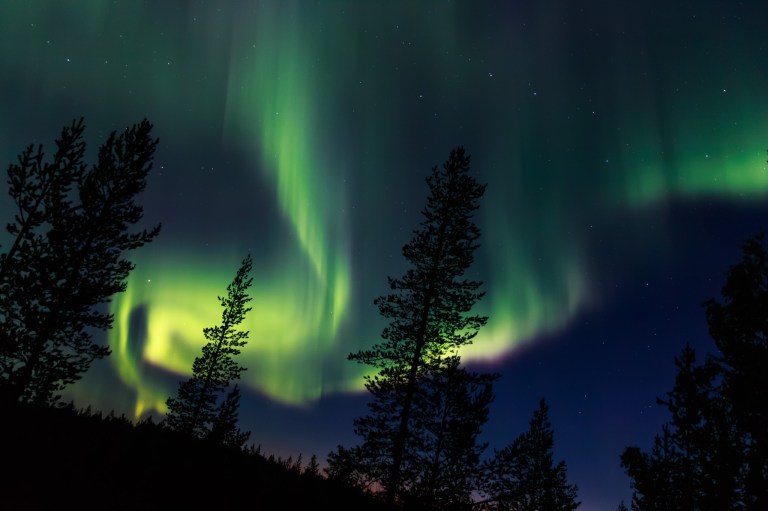
However, that will change, at least temporarily, in 2024. Because of increased, strengthened solar activity, the northern lights are expected to be visible in areas in which they normally aren’t, including Missouri and other states in and above the 40th parallel. Experts believe the peak will occur in the fall and winter this year - especially between the months of October and March.
While we may have heard and perhaps even seen the northern lights, we might not be familiar with why they occur. Aurora borealis occurs, as explained by the National Park Service, when “a coronal mass ejection (CME), a massive burst of solar wind and magnetic fields, interacts with elements in the earth's atmosphere.”

Three CMEs a day are generally produced by the sun during solar maximum compared to just one CME every three days during solar minimum. Solar maximum is the busiest time of the solar cycle; the cycle usually runs for 11 years. At a speed of around one million miles an hour, solar winds travel between the sun and the earth. At between 20 and 200 feet above the surface of the earth, the electrons will either collide with oxygen or nitrogen atoms.

How far above the Earth’s surface and with what the electrons collide will determine the color – blue, green, red, or purple – of the aurora.
There are several ways to track when and where the northern lights will be visible in Missouri. Find a map on the official website of the NOAA Aurora 30-Minute Forecast. You can also download the My Aurora Forecast and Alerts app or the Aurora Alerts app on your smartphone to keep track of when the northern lights in Missouri in 2024 may be visible. The lights might not be completely visible with the naked eye, so try using binoculars or a high-definition camera to capture the phenomenon.

Do you plan on seeing the northern lights in Missouri in 2024? Or have you seen this celestial event elsewhere, in the past? Whether you want to stargaze or hope to catch the northern lights, on a clear night, you’ll want to head somewhere with dark skies that are as free of light pollution as possible, including Broemmelsiek Park in Defiance, Missouri. The farther north you go, the better your chances of seeing the celestial show.
According to NOAA, the light show is best seen between 10 p.m. and 2 a.m., so be sure to plan accordingly, and keep your eyes on the skies. Also, before you head out for an evening of stargazing, don't forget to have your binoculars or your camera ready.
Good luck capturing photos and videos for this once-in-a-lifetime event!
Subscribe to our newsletter
Get the latest updates and news
Thank you for subscribing!