Don’t Try This One Hike in Georgia If You’re Afraid of Heights
Blood Mountain via the Byron Reece Trail is one of Georgia’s most extreme hikes, known for its steep elevation gain and exposed rock ledges. The combination of narrow paths and dramatic summit views makes this trail especially challenging for anyone uncomfortable with heights.
If heights make your stomach flip, Blood Mountain is not the hike you want to “power through.” This North Georgia trail doesn’t ease hikers into the climb or soften the views at the top. Instead, the Byron Reece Trail charges straight uphill, trading comfort for steep elevation, exposed rock faces, and summit ledges that feel uncomfortably close to the edge...but, then again, maybe that's just me. Blood Mountain may be one of Georgia’s most popular hikes, but for anyone uneasy with heights, it’s also one of the most intimidating places to lace up hiking boots in the state.
Why Blood Mountain Is One of Georgia’s Most Intimidating Hikes
Rising to 4,458 feet, Blood Mountain is the highest peak on Georgia’s portion of the Appalachian Trail. The Byron Reece Trail is the most popular way to reach the summit, and while it’s considered the “shorter” route, it’s anything but easy. In just over four miles round trip, the trail gains roughly 1,400 feet in elevation, much of it in a relentless uphill push that leaves little room for recovery.
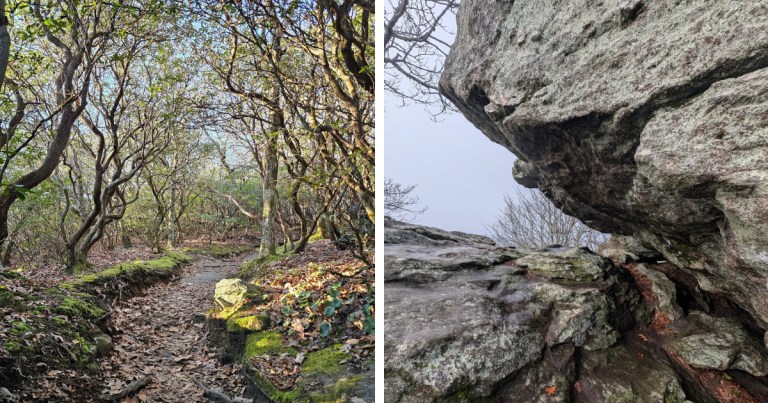
What makes this hike especially intense isn’t just the climb—it’s the exposure. As you gain elevation, the trail transitions from forest floor to rock-strewn paths and narrow ledges. Large boulders require light scrambling, and near the summit, hikers are rewarded (or punished) with wide-open views that drop sharply into the valleys below.

What to Expect on the Byron Reece Trail
The summit itself is where Blood Mountain earns its reputation. Massive rock slabs form natural viewing platforms, some with sheer drop-offs and no guardrails. Standing at the top feels less like a scenic overlook and more like balancing on the edge of the state. On clear days, the views stretch across the Blue Ridge Mountains, but looking down is not for the faint of heart.
Despite its extreme feel, this hike is manageable with the right preparation. Good hiking shoes are essential, as slick rock surfaces and uneven footing can quickly become dangerous. Water is a must, especially in warmer months, and trekking poles can help stabilize knees during the descent, which can be just as challenging as the climb. Weather changes quickly at higher elevations, so layers are strongly recommended.

Best Time of Year to Hike Blood Mountain Safely
Timing also matters. Blood Mountain is popular year-round, but weekends can feel crowded, especially during peak fall foliage. Starting early helps avoid both crowds and afternoon weather changes. Winter hikes bring fewer people but introduce icy conditions that significantly raise the risk factor. Also, make sure that before you go that the visibility is good. It'll be a much harder trek if there is rolling fog limiting how far ahead you can see.

Blood Mountain via the Byron Reece Trail isn’t just a hike—it’s a challenge. It demands focus, balance, and a steady head for heights. For thrill-seekers, it’s one of Georgia’s most rewarding climbs. For anyone afraid of heights, consider this your warning: Blood Mountain doesn’t pull its punches.
Plan your own trip to check out the most extreme hike in Georgia with Only In Your State’s AI-powered itinerary planner.
Subscribe to our newsletter
Get the latest updates and news
Thank you for subscribing!