Seeing This Arizona National Park After Dark Is Better Than Daytime
Discover Organ Pipe Cactus National Monument after dark. Embrace the stillness as you gaze into the stunning night skies.
There are so many places to visit after sunset in Arizona, but if you ask me, none sparkle more than Organ Pipe Cactus National Monument at night. Nestled in the Sonoran Desert, in Ajo near the Mexican border, this unique park is known for its wild senita and organ pipe cactus (hence the name). That said, the vast terrain is even more spectacular after dark, when the stars glow over the remote desert.
Boasting “some of the most pristine dark skies” in the country, this underrated stargazing spot in Arizona is a destination to trade the daytime to immerse yourself in the surreal stillness of the nighttime skies. Here, stargazers, photographers, and dreamers like me, come to discover what secrets are hidden between the billions of stars in our Milky Way galaxy.
Why Visiting Organ Pipe Cactus National Monument at Night Is Better Than Daytime
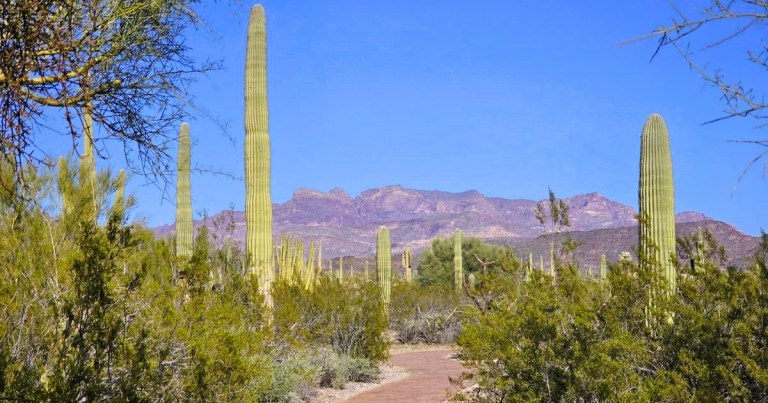
Over 100 miles from the busy corridors of Phoenix and Tucson, Organ Pipe is the kind of destination to literally get away from it all. Hikers come to this national park to explore its mostly untouched desert wilderness, and to walk through its striking cactus forest. Some of these desert plants can rise to 40 or 50 feet tall, making this 300,000-acre playground rare and special. More than the cacti, miles of scenic drive offer views of wide-open landscapes, rugged mountains, and canyons.
While the park is perfect for daytime exploration, Organ Pipe Cactus National Monument at night is when the magic happens. Its location near the Mexican border, provides some of the darkest skies in Arizona. At night, the desert takes on a whole different character. It’s quiet, it’s peaceful, and as the darkness slips in, seeing the silhouettes of the towering cacti against the backdrop of the mountains will feel unreal. While there are lots of things to do in Organ Pipe Cactus National Monument, stargazing is truly magical here.
What Makes Organ Pipe Cactus National Monument So Magical After Dark

Above, when the Milky Way stretches across the night sky, or unexpected shooting stars streak through the heavens, you’ll realize just how tiny we are in our vast universe. Time will slow as you gaze into the deep night sky, allowing your imagination to take you on a journey into the cosmos. Here, photographers, astronomers, and night gazers will feel peace, and for some of us… a sense of longing.
With our busy daily lives, it’s hard to find this level of quiet stillness anywhere else, making Organ Pipe a destination worth visiting. Although the national monument is not an official Arizona International Dark-Sky Park, the park is currently pursuing its designation. But have no worries, with its low light pollution and wide-open skies, you’ll have one of the best seats in the house for stargazing in Arizona.
Best Times for a Night Visit to Organ Pipe Cactus National Monument

You’ll want to book a camping spot to coincide with Milky Way season in Arizona, which typically runs from March to September. But keep in mind, it’s the desert, and summers are hot, not to mention cloud cover from the monsoon season can easily kill the vibes. You want to make sure that Mother Nature doesn’t obstruct your stargazing adventure.
Plus, cooler weather is far more comfortable to spend longer hours outside, whether you’re here in the day or at night. If you want to take advantage of the ranger-led dark sky programs, I’d suggest visiting during December to mid-April.
Stargazers, you’ll be delighted to know that the park has two telescope viewing pads, one at the Twin Peak Campground Amphitheater and the other at the Pinkley Peak Picnic Area. Overnight visitors can set up their equipment here; you’ll find places to sit, and there are facilities, too. Bring a blanket, your equipment, and snacks, since you’ll be sitting here for several hours after sunset (which, by the way, you don’t want to miss).

For the best views of the sky, avoid the full moon — it dulls the vibrancy of the Milky Way. NASA’s moon phase calendar can help you determine when the next full moon will be. If you haven’t done so, you may also want to download a stargazing app on your phone, so that you can easily pinpoint the planets, stars, constellations, and satellites in the sky.
Be sure to visit the National Park Service’s website to learn more about the park, nighttime programs, and the campground. As with some national parks, there is an entrance fee, but your America the Beautiful Pass will also get you access.
Is This Remote National Park in Arizona Worth Visiting

Yes, indeed it is! Organ Pipe Cactus National Monument is the only destination in the country where you’ll find the towering organ pipe cacti growing naturally. So, this low-key national park is already a hidden gem in Arizona, well, in my humble opinion. Visitors can find solitude hiking the rugged trails or driving along the winding scenic roads, soaking up the views of the desert landscape.
Daytime here offers a truly unique experience, but after sunset is when the park comes alive. As the sun goes down, the park wakes up with the Milky Way glowing in the sky. With the shadows of the striking cacti clusters and the rugged mountains in the backdrop, this place is like a dream come true for stargazers, photographers, and the everyday explorer in you. This secluded national park could arguably be one of the best stargazing destinations in Arizona.
Subscribe to our newsletter
Get the latest updates and news
Thank you for subscribing!