It’s Impossible To Forget The Year Hawaii Saw Its Single Largest Snowfall Ever
Snow can be found on Hawaii's tallest mountains, including Mauna Kea, Mauna Loa, and Mount Haleakala, under the right conditions.
No one really expects to see snow in Hawaii, do they? After all, many people travel to the beautiful Aloha State in an attempt to escape cold weather and snow. But snow is exactly what you’ll find if you head to the summit of Hawaii’s tallest mountains, Mauna Kea, Mauna Loa, and Mount Haleakala. Now, obviously, these mountain peaks aren’t always covered in snow, and the conditions have to be just right, but it’s impossible to forget the year Hawaii saw its single largest snowfall ever.
Prior to 2016, the single largest snowfall ever recorded in Hawaii took place atop Maui’s Mount Haleakala on April 6, 1938, with a whopping six inches of snowfall. However, in December 2016, more than two feet of snow blanketed Mauna Kea in white, just in time for Christmas.
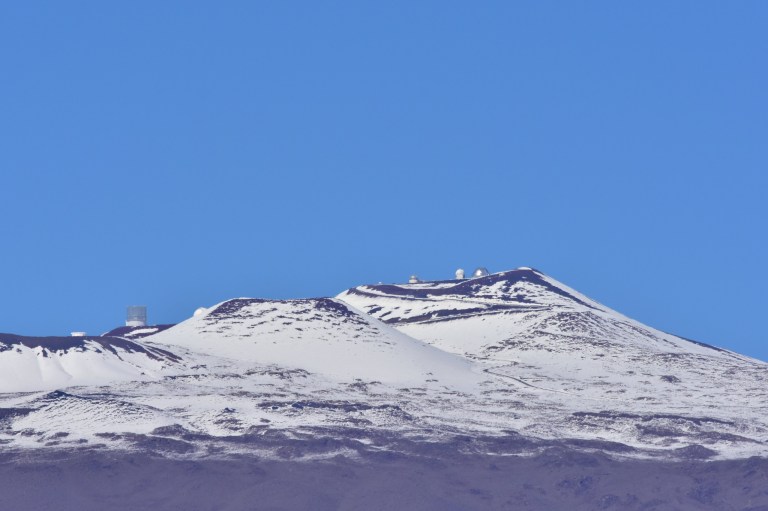
Now, just so we’re clear: these snowfall totals are merely estimations. Because Mauna Kea’s summit is uninhabited and the road is closed during inclement weather, we can’t know for sure how much snow fell in early December 2016 — but it was a lot more than Hawaii is used to, that’s for sure!

Mauna Kea measures in at 13,796 feet above sea level, the highest point in the state of Hawaii. In fact, when measured from its oceanic base deep in the vast Pacific, the mountain measures in at more than 33,000 feet tall — that’s higher than Mount Everest.

The summit lies about the tree line and primarily consists of lava rock and alpine tundra. Growth is restricted by extremely cold temperatures, a short growing season, little rainfall, and snow during the winter months.

According to a report on weather.com, snow rarely falls below 9,000 feet in elevation across the Hawaiian Islands, and the fluffy white stuff never stays for more than a few days. Though not maintained as a recreational ski area, many intermediate and expert skiers and snowboarders often flock to the mountain during a snowstorm.

While many might opt to forgo a trip to the snowy summit of Mauna Kea because they have neglected to pack long pants and a jacket, there are countless Hawaii residents who visit Mauna Kea to see snow — whether, as transplants, they miss the snow, or they’ve lived here their entire life and have never experienced snow.

Even if there’s no snow by the time you visit this year, you’re still sure to get your fix of cold weather while at the summit of Mauna Kea; winter temperatures average from 25 to 40 degrees Fahrenheit, with summer temperatures varying from 30 to 60 degrees.

If you’re planning to visit, call ahead — especially in the winter months. When it snows, it takes crews a few days to clear away the ice and make the roads safe to drive again.

For up to date weather conditions on the summit, check out Mauna Kea’s live streaming weather cams. Mauna Kea is a truly majestic and breathtaking piece of Hawaii. It's worth a visit - no matter what time of year it is!
Subscribe to our newsletter
Get the latest updates and news
Thank you for subscribing!