The Real Story Behind These Mysterious Hives In Wyoming Will Fascinate You
It's amazing the things you'll stumble across when traveling the backroads of Wyoming. Take the scenic backway between Fort Bridger and Evanston, for example. About 25 miles into the drive along County Road 173 stand three structures that look like giant hives, with the crumbling remains of a fourth nearby. They are what is left of a thriving railroad town, and their story is fascinating.
The drive to Evanston from Fort Bridger is about 25 miles on I-80 but taking Unita County Road 173 only adds 5 miles to the journey, and it offers a bit of Wyoming history you won't see on the more frequently traveled road.
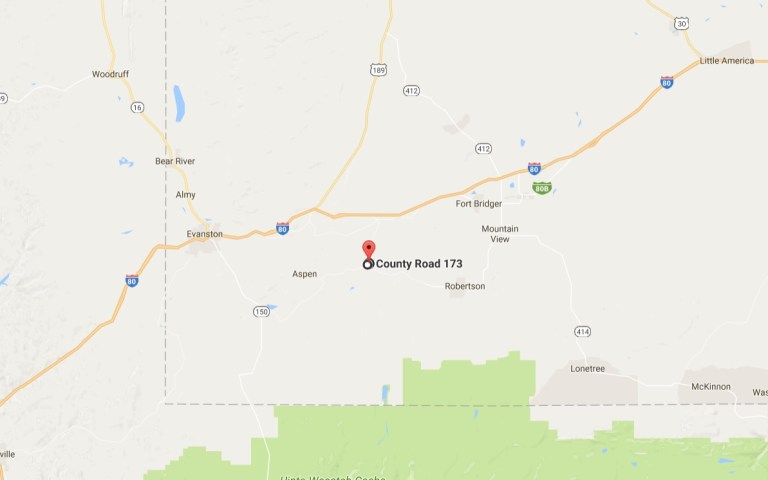
Right about the half-way mark, where the town of Piedmont used to stand, you'll see three mysterious giant hives.

They're not the remains of a race of gigantic bees. They are actually kilns that were constructed in 1869 for the purpose of producing charcoal.

In 1868, Union Pacific brought the railroad through the area, and Piedmont soon started expanding around it. With the Unita mountains full of timber that could be made into charcoal and the railroad right there, it was the ideal spot for such an enterprise.
In addition to an abundance of timber, the area also had a supply of limestone and sandstone for building the kilns.

The "hives" measure 30 feet high and 30 feet wide at the base. The conical shape and precisely placed vents create the perfect atmosphere for making charcoal.
Pine logs were packed tight into the kilns and were stacked upright two layers high, then they were lit but not allowed to fully burn.

The openings around the bases and at the tops of the kilns served as vents that could be closed off and opened to keep the logs smoldering for several days.

Most of the charcoal produced in the Piedmont Kilns was shipped to Salt Lake Valley, though some of it stayed in Wyoming for use as heating fuel or by blacksmiths.
Though the railroad and charcoal production turned Piedmont into a prosperous town —
at the peak of prosperity, it's estimated that more than 100,000 bushels of charcoal were shipped out each month. The area was a ghost town by 1940.

In its heyday, Piedmont boasted a telegraph office, mercantile, water tank, roundhouse, and many other businesses and buildings. The price of charcoal had declined already but, when Union Pacific dug a tunnel through Aspen Mountain and rerouted the railroad to completely bypass Piedmont, the town's fate was sealed.
Today all that remains of a once bustling town are a few deteriorating homes (some are only foundations), a coal dump where the railroad engine shed used to stand...

...and what is left of the kilns.

The Piedmont Kilns were put on the National Register of Historic Places in 1971.
Their presence is a testimony to the history of Wyoming when it was still just a territory.

Have you visited the Piedmont Kilns? What other mysterious and fascinating pieces of Wyoming history have you come across?
Subscribe to our newsletter
Get the latest updates and news
Thank you for subscribing!