I Fell In Love with the Colorado Prairie at Aurora’s Plains Conservation Center – And You Will, Too!
I always say, "I moved to Colorado for the mountains and fell in love with the prairie," and it's true. The Plains Conservation Center in Aurora is responsible for that.
I moved to Colorado for the mountains.
I have always loved the Rocky Mountains. Even though I was brought up on the east coast and am an east coaster through and through, in many ways, for life, I have always felt drawn to higher elevations. The accessibility of the Rocky Mountains was something made me choose Denver over a wide variety of other options when I decided to move away from my upstate New York hometown.
With that in mind, I always get a real kick out of the fact that I moved to Colorado for the mountains, but soon after my arrival, I also fell in love with the prairie.
Who would have thought? I’d driven cross country numerous times during my 20s and 30s and - like most - I always found the Great Plains to be painfully boring. There’s nothing there, I thought - and I always tried to get across the Great Plains states as quickly as possible.
When I moved to Colorado in 2013, I’d recently left a classroom teaching job in New York. Before teaching at a school, I’d spent several years working at nature and outdoor centers teaching kids about the environment, so I decided to find a part time job in that realm in my new home. I found an advertisement online seeking educators at a place called the Plains Conservation Center, and I decided to apply. Soon, I heard back, and I was invited to interview.

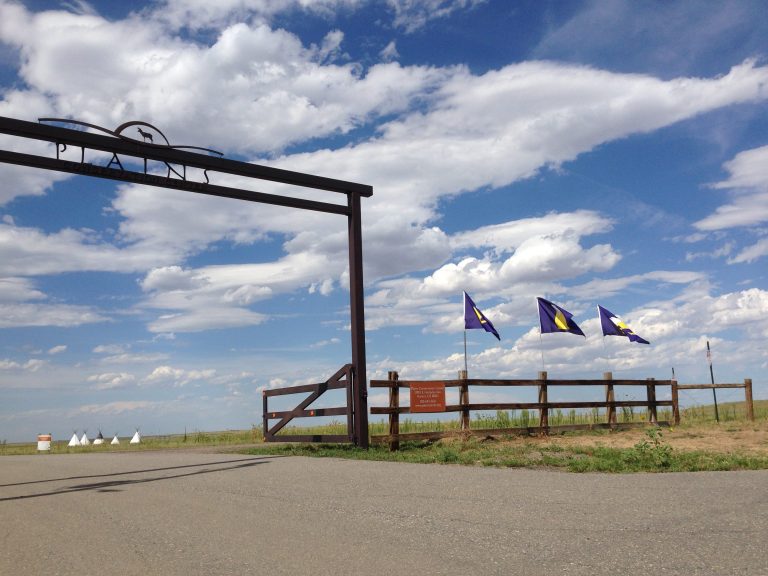
When I drove to the Plains Conservation Center for the first time for that interview, I was completely underwhelmed and unimpressed. I turned off the main road onto the dirt entrance road and looked around. First of all, there were no trees. Second, this 1000-acre property appeared to be as flat as a pancake. Third, there were only a few buildings. The grass was yellow and appeared to be mostly dead. It was March, so there were no flowers; everything was drab and, well… boring.
I almost turned around right then. This didn’t seem like a place I’d want to work. But, I decided to go to the interview anyway - and I’m so glad that I did.
I got the job, obviously. Now, 11 years later, I still work at the Plains Conservation Center. The first few years I lived in Colorado, I worked there often. As time has passed, other responsibilities have begun to take over my time, but I still work there occasionally when I can, because I absolutely love the place - and because the prairie has become a part of me and is an important part of my life.

At the Plains Conservation Center, through the Denver Botanic Gardens, we offer a wide variety of programs to the public. The City of Aurora manages the property and provides programs, too, through Aurora's Department of Parks, Recreation, and Open Space. When I first started working there in 2013, the Plains Conservation Center was an independent non-profit on land owned by Aurora. Our focus back then was school programs; when the non-profit ceased operation a few years later due to financial issues, Denver Botanic Gardens adopted us, allowing those programs to continue.
It was through teaching the school programs we offered that I really got to know the Colorado prairie. Our three main school programs - then and now, still - teach school children about the ecology of the prairie, the lives of 1880s homesteaders, and the life and culture of the Cheyenne. In addition to hundreds of acres of open space upon which birds, reptiles, mammals, and plants live, we have a visitor center building, a sod homestead that includes several replica buildings (and farm animals in the warmer months!), and a Cheyenne camp made up of several tipis. As I learned about all of these areas of the Plains Conservation Center and began to teach children about them, I quickly developed a deep appreciation for this place, this ecosystem, its history, and its hidden beauty.

When at the Plains Center, I often look to the west. In our location in the southwest corner of the Denver metro, we have a panoramic view of the Rockies, even though they are many miles away. From the Plains Center property, you can see Longs Peak in Rocky Mountain National Park on the north end of the panorama, Mount Blue Sky when looking almost due west, and Pikes Peak near Colorado Springs to the left and on the south end of the view. I often find myself gazing upon these mountains and thinking about how big they are and how gigantic they must have seemed to the settlers who'd seen nothing but flat land for months prior to reaching this point.
I point this out to my students; I hope it gives them a greater understanding of what it was like to be a homesteader. I explained to them that this place surely felt foreign and intimidating to these people who had traveled so far and about how they'd been told it would be a great place to farm when that wasn't wholly true. I tell them that despite the challenges these adventurers faced on the prairie, for most, there was no turning back. They had to learn to love it and work with it - or perish.

I also look to the east. To the east, E-470 rolls past our property, and beyond that, I know that the prairie continues for hundreds of miles. When I look in that direction, I think not only of the homesteaders who made their way across that land in their wagons and on foot but also of the many Native American cultures that these plains supported for hundreds of years, ceremonies, stories, struggles, and victories, and the millions of bison that those native people hunted there, too.
To people driving quickly across the Great Plains on our interstate highways, these landscapes may not look like much, but these people knew them well. They were their home.
I look to the north and south, as well. During my initial visit to the Plains Conservation Center, everything appeared dead - it was March, after all. I now know that this patch of prairie is incredibly alive in all seasons. Countless animals make it their home, including a large herd of pronghorn, dozens of species of birds, entire prairie dog communities, three species of snakes, vastly varied insects, and even a nesting pair of bald eagles. The prairie is also the perfect environment for so many different plants, including wildflowers and cacti. All of these creatures are connected in beautiful, complicated ways with incredible simplicity; the perfection of nature on the prairie is so clear and evident.
I tell my students - to fully grasp the beauty of the mountains, it might be best to first look at them from far away and then go into them and get close to understanding them more deeply.
For the prairie, though, it's the opposite. First, you must look closely. Once you know it well up close, then it will become absolutely breathtaking and overwhelmingly beautiful, too, when you next look at it from far away.
It took me some time to become enamored with the prairie, but in time, I fell in love with it completely. I feel so fortunate to have fostered this relationship with the land and to be able to enjoy this access and exposure to it on such a regular basis through my work at this site. If I hadn't applied for this job at the Plains Conservation Center way back in 2013, it's likely I'd still be thinking of the prairie as something to get through and to get past to get to "the good stuff" instead of learning and knowing that it IS "the good stuff" - just as much as the mountains, forests, beaches, and other ecosystems that I've loved all along.
The prairie is simple and calm, and magical, and spectacular.

If you'd like to fall in love with the prairie, too, it's ready, willing, and waiting for you just beyond the Denver suburbs. The Plains Conservation Center is the perfect place for you to begin. The Plains Conservation Center property belongs to the public and you will feel welcome as soon as you arrive.
There are so many things to do. You can come to Aurora simply to walk the trails if you'd like, or you can sign up for a public program through Denver Botanic Gardens or Aurora Parks, Recreation, and Open Space. You can come and check out the exhibits in our main building and learn about the history and wildlife on site. You can go on a wagon ride out onto the open space with a naturalist and observe wildlife and marvel at the distant mountain view. You might enjoy a guided full moon hike or participating in a family educational program of some kind with your kids. You can check out our sod village, pet the farm animals, and see what we have growing in the garden. You can attend one of our public events, like an SCFD Free Day or our annual Agricultural Festival. You can bring a drawing book, camera, or paints and sit and capture the beauty you see in your own way. There are so many ways to enjoy this land and ecosystem.

It may be hard to even know where to begin if you wish to immerse yourself in the Colorado prairie at the Plains Conservation Center. If I can make a suggestion, though - I have one that I think is perfect. When we teach our Prairie Ecology program to school groups, my favorite part is always this: we head out onto the prairie, tell the kids to find a spot, and ask them to stand still. We set a five-minute timer, and tell them to just be silent.
When you do this, the prairie will come to you. The wind might blow, hawks may swoop, and prairie dogs may chirp - but you won't hear much else. Smell the air. Touch the ground; feel the breeze on your face. Look at the vastness of the prairie all around you.
Take it all in.
And then - your love affair with the prairie will begin.
Subscribe to our newsletter
Get the latest updates and news
Thank you for subscribing!