Take a Day Trip to This Beautiful and Historic Utah Town
Fruita, a historic ghost town in Capitol Reef National Park, offers charming orchards, historic sites, and scenic outdoor activities.
Utah is home to all types of remarkable small towns. Many of these charming destinations have quite a history and make for delightful day trips. Fruita, Utah is one town that, while technically considered a ghost town, is a charming, enchanting, and historic area that is always worth a visit.
Capitol Reef National Park is one of the most under-appreciated national parks in Utah. This park is home to incredible hiking, beautiful landscapes, and of course, Fruita. Fruita is a small settlement nestled in the heart of Capitol Reef National Park. This area was home to Fremont Indians as early as the 700s and was settled by pioneers of the Church of Jesus Christ of Latter-day Saints in 1880.
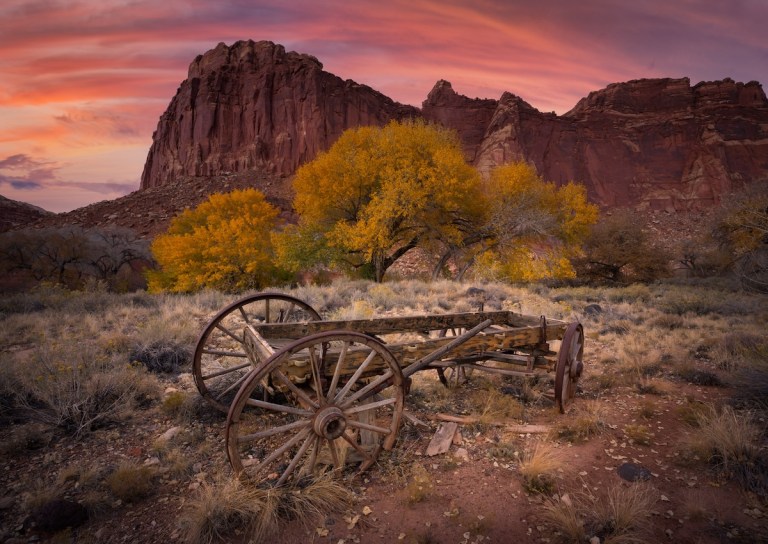
Settlers from nearby towns like Torrey and Loa would come to Fruita to plant thousands of trees, as this area boasted a much longer growing season. Eventually, the town flourished, and a school, stores, a lodge, and other structures were established. However, while Fruita was settled by members of the Church of Jesus Christ of Latter-day Saints, it wasn’t a typical Mormon community. No church was ever built in the town, and practices against the church's standards weren’t uncommon.
So, where is Fruita, Utah located exactly? Well, Fruita is located in the desert and along a river that is known for flooding. It didn’t even see paved roads until the 1960s, and during most of its history, no more than 10 families lived in the town at once. But today, Fruita has become one of the most popular areas to explore in Capitol Reef National Park. While technically a ghost town, there is still so much to see and do that it makes for a delightful day trip destination.

In fact, Fruita is best known for its orchards, which contain nearly 2,000 trees. Throughout the year, you can pick fruit in these orchards, including apricots, peaches, pears, and apples. All money collected from the fruit is used to continue preservation efforts, as these Utah orchards are protected and listed on the National Register of Historic Places.
You can also spend some time visiting the historic Fruita Schoolhouse, which gives you a glimpse into the life of young children in the area during the early 1900s. And don't forget to stop at the Gifford House, which was renovated and refurnished by the National Park Service to make you feel like you've taken a step decades back in time. My personal favorite area is the kitchen (a non-historic addition to the home), which is now a store where you can find all types of unique goods from woven rugs and quilts to jams, jellies, and locally-baked fruit pies. The Gifford Homestead is open seasonally, usually between March and November.

For outdoor adventures in the area, tackle one of the scenic hikes, check out the petroglyphs, go for a scenic drive, or even stay at the Fruita Campground. This is a 71-site campground and is the only developed campground in all of Capitol Reef National Park. Reservations are required and available between March 1 and October 31 each year.
Fruita, Utah and the Capitol Reef National Park may be one of the most under-appreciated national parks in Utah, but we also think it is one of the easiest to love. For another Utah national park to visit, check out Arches. You can learn more in the following Only In Your State video. And if you're looking for even more things to do, see, or eat in the area, we recommend checking out our itinerary planner for recommendations!

Subscribe to our newsletter
Get the latest updates and news
Thank you for subscribing!