How to Support Small Businesses When You Travel
Walk into a mom-and-pop shop and you’ll find unique, hand-made products infused with local charm, maybe even with inside jokes — it’s like a cheat sheet for getting to know a place when traveling!
We probably don’t think enough about small businesses, and how they’re the true underpinnings of a city. Micro enterprises and the passionate entrepreneurs behind them give a location an appealing texture and local flavor, not to mention credibility. Walk into a mom-and-pop shop and you’ll find unique, hand-made products infused with local charm, maybe even with inside jokes — it’s like a cheat sheet for getting to know a place. Often, the proprietors are right there for you to shoot the breeze with, and maybe come away with a hidden gem recommendation or two.
Without these small businesses, every destination would look the same. And what fun would that be?
One person who champions — and embodies — the importance of local entrepreneurs is Samantha Demarkles: content creator, poet, and small business owner in Missouri, who first dabbled in entrepreneurship with her craft store Handle With Care. Last December she and her partner, restaurateur Matt McGuire, launched Box Hill Grocery in the city of Clayton, named after McGuire’s farm and set in a storefront adjacent to his restaurant Wright’s Tavern.
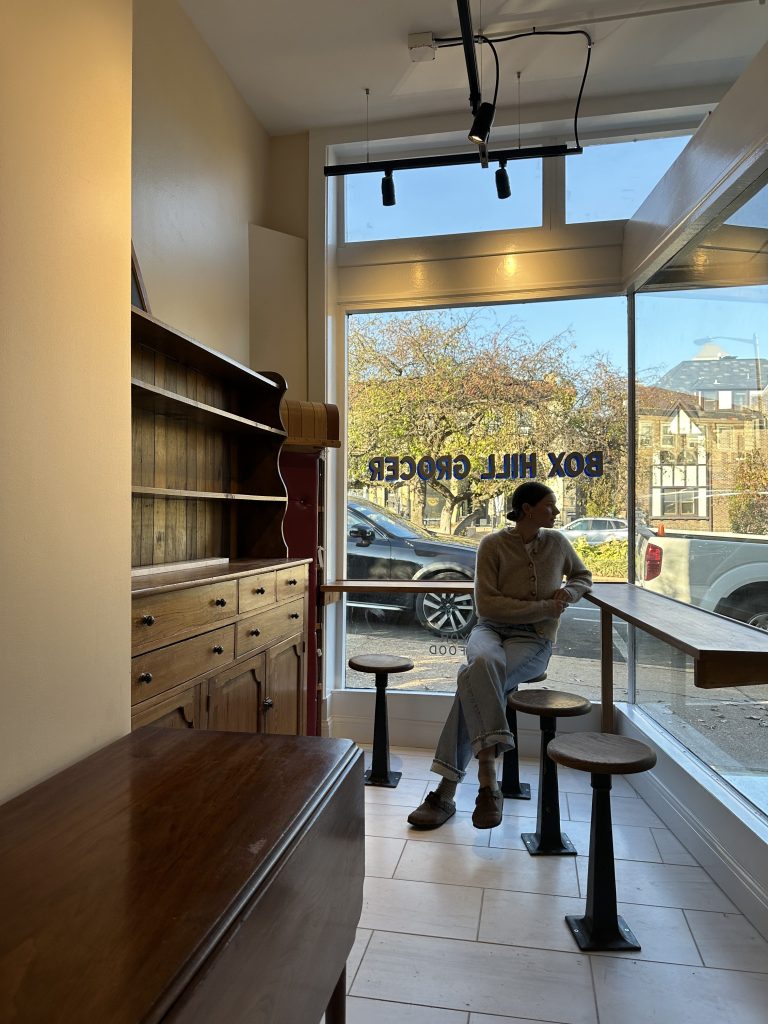
Warm and airy, Box Hill Grocer was designed to fill a niche in the neighborhood — another characteristic of small businesses — purveying semi-prepared and fully cooked grab-and-go hot and cold items. As a small specialty store, they also have the ability to easily stock their shelves based on guests' demand, making it a true reflection of the neighborhood.
“Box Hill Grocer is a lifestyle in its own way, encouraging you to be home and pay attention to your surroundings and any really, really quality good food,” says Demarkles. “We have a lot of small [brands], like Meet The Source [Bliss] balls that I love. It's been connecting a lot of the brands that I'm passionate about and bringing them there.”
There’s deliberation in the food: fluffy baked goods are made from scratch, the chicken is smoked in-house, and beets are boiled and peeled with love. It’s high-quality food that you would get in one of McGuire’s restaurants. “The care that we both have for what you’re putting in your body is represented there,” says Demarkles.
Being mindful of what you put in your body is especially important to Demarkles. Just as with the items in Box Hill Grocery, on her Instagram page she regularly prepares simple, clean, and mouthwatering recipes. It follows then that when she travels, she wants to eat in places that align with her philosophy and are made with care by a local purveyor. But typically these places don't have big advertising budgets. So how would you find them? She turns to the same place that has served her well when sharing her recipes: Instagram.
Demarkles believes that by looking at a store’s social media presence, “you can tell if someone really cares about what they're doing,” adding that by examining their grid you can usually immediately tell whether a place appeals to you. Instagram is beneficial for both the person looking for new places to spend their money, and for the business themselves to navigate their customer base. “Small businesses were turning to Instagram to become their own person… outside the internet, you're connecting with customers on that platform,” she says.
Before recent trips, Demarkles would do her homework, hunting online for restaurants and attractions, turning to the online community she had already curated. “From the people that I followed [on Instagram] in the wellness space — they lived all over— so I knew exactly where I wanted to go in Chicago, I knew exactly where I wanted to go in Nashville. Same with California,” she says. “Because you couldn't get that [clean food] just anywhere.”

One thing she emphasizes, however, is that you don’t have to limit your small business patronage to just when you’re away from home. The strategy is just as effective in your own community, even when an item can easily be bought online. “Online shopping is really big, but I always want to go touch it [a product] in person,” she says. Who wouldn’t want to smell a candle before you buy, or try that hat on to make sure it actually doesn’t look ridiculous?
She has her favorite shops in St. Louis, but since moving to the country frequenting the small stores in her community was another way to become familiar with her new surroundings. “I did a lot of my Christmas shopping [locally],” she says. By doing so she learned quite a bit about her new home. “These people don't even have electronic [checkout]... this woman hand writes your receipt for you. They have a card reader, they'll take your money, but she's handwriting a receipt on an old clerk checking receipt.”
Not all small businesses operate this way, of course, but you have to admit there’s some added charm. Demarkles estimates that half the people in her new community still carry their checkbooks. “It makes you more thoughtful and intentional [with your purchases],” she says. "You're not just running around, swiping places or they don't have your information saved. You can't just click it and it comes to your door, you have to think about it.”
This article is part of our Known Traveler series where we highlight creators who share inspiring travel and lifestyle content. Check out the full edition for Wellness Wanderers.
Subscribe to our newsletter
Get the latest updates and news
Thank you for subscribing!