The Small Town in Alaska That Looks Straight Out of “Stranger Things”
Alaska is full of abandoned towns and mysterious places, but this secluded community is a little "stranger" than most.
As the coldest, wildest, and most remote part of the U.S., hiding centuries of unwritten and unexplained history literally frozen in time, it's no surprise that the Last Frontier is full of naturally mysterious places. Add in a few decades of Soviet and U.S. history, and all that eerie strangeness intensifies tenfold. South-central Alaska is home to at least one such unsettling place, and it echoes one of the most chilling parallel dimensions in sci-fi history.
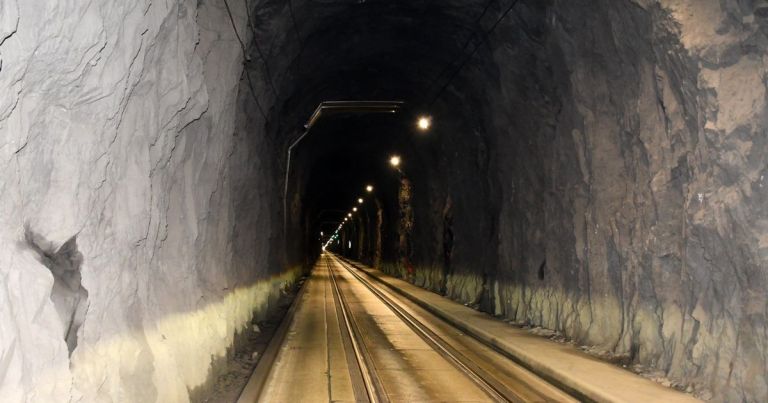
Opened to vehicles in 2000, the Anton Anderson Memorial Tunnel is a 2.5-mile, single-lane road blasted through solid mountain rock that connects the small town of Whittier to the rest of Alaska. The tunnel was originally constructed during World War II as a rail-only tunnel, and for 20 years, it served as a vital military access route between the Anchorage rail line and the port at Whittier. Today, at 13,300 feet, it's the longest highway tunnel in North America and the only one in the U.S. shared by both cars and trains. To drive through it, vehicles have to wait for scheduled openings and drive directly through Maynard Mountain, one lane at a time.
When the tunnel closes each night, Whittier is effectively sealed off from the rest of Alaska.
This quiet, isolated town is easily one of Alaska's most unusual communities, but not just because of its access via tunnel. Hidden at the base of the steep mountain walls along the edge of Prince William Sound, Whittier is home to less than 300 residents, most of whom live together in a single concrete building. Here, icy coastal wind sweeps through the harbor while thick, eerie fog hovers above the Sound and shrouds the surrounding forests. Just above the town sits the decaying shell of a massive abandoned military structure, slowly being reclaimed by the elements—one of Alaska's most famous abandoned places. All these sights combined form an eerie, cinematic scene.

For visitors stepping into the midst (or mist) of it all, especially in the winter, Whittier doesn't feel like a typical small town, and is about as far away from Hawkins, Indiana, as one can get. Instead, it feels like a place that's a little out of sync with the historic fishing villages and colorful tourist destinations found in the rest of the state. But if you're the kind of traveler who finds the Upside Down in "Stranger Things" equal parts fascinating and frightening, the slightly off-kilter qualities of Whittier might be the closest you'll get to stepping into the 1980s set for yourself.
Despite no Mind Flayer looming on the horizon, the parallels to the series are everywhere you turn, starting with the architecture. Although surrounded by incredible waterfront beauty, Whittier’s stark, industrial heart mirrors the terrifying corridors of Hawkins Lab—the behemoth labyrinth in "Stranger Things" where much of the Upside Down’s mystery unfolds. Begich Towers, Whittier’s massive 14-story concrete condominium, dominates the town just like the Indiana lab’s windowless facility, with its utilitarian design, dim hallways, and the feeling that everyone is compressed and sealed inside a giant anchovy tin. In "Stranger Things," the lab is both isolated and imposing, with countless lives and secrets confined within its concrete walls. Whittier feels as surreal and storied as the Upside Down, but it's 100 percent real.

"...a dark echo of our world, a parallel dimension—overgrown with black vines that move, and the air is full of floating spores, like poison snow."
Whittier's otherworldly tunnels set the eerie tone. Much like the Mothergate between Hawkins and the Upside Down, the industrial, tubular Anton Anderson Memorial Tunnel is a narrow, dystopian, controlled threshold that separates Whittier from the rest of the world. It echoes the way characters in the show cross into Vecna's backward dimension, only here it’s a physical bottleneck leading into a town that already feels like an alternate reality. Uniquely, those who board the Alaska Railroad through the tunnel will experience complete darkness while the train winds through the inside of the mountain, which is as disorienting as anything you'd find in the Upside Down.
Begich Towers ("The Building") holds most of the town’s residents, along with key services, all under one roof. This vertical city, with its long hallways and fluorescent lighting, could easily be a set piece from Hawkins Lab’s sterile corridors. Kids even have to walk to school through an eerie underground tunnel that connects the tower to the elementary school, just like characters in "Stranger Things" move through secret passageways and hidden spaces beneath the surface of their town.

You'll also find the infamous Buckner Building perched just above Whittier, a crumbling, dystopian remnant of the Cold War. For years, this decaying, empty complex with broken windows and rusted halls has looked like a physical manifestation of the Upside Down’s hostile environment, no CGI spores or Demogorgons needed. Its desolation mirrors scenes from the series where even the town's familiar spaces are turned cold and dark, overtaken by creeping decay, and where time has stopped and danger lurks unseen around every corner. Even more real, the building is too reinforced and full of toxic chemicals to demolish.

The architecture is undeniably spooky, but Whittier’s weather and geography only amplify the uncanny. In the Upside Down, visibility is limited by the ash-like detritus that floats in the air. In Whittier, the heavy rain and relentless fog roll in with a similar thick, moody atmosphere. The muted colors, constant low clouds, and the way fog clings to the mountains create the same feeling of disorientation and suspended time you get watching Eleven and her friends navigate Hawkins' dangerous shadow world. The town’s muted palette of gray concrete, dark water, and shrouded pines matches the Upside Down’s washed-out, eerie landscape.
But you don't need to be a fan of "Stranger Things" or D&D to enjoy a visit to Whittier. In fact, you don't even need to be a fan of eerie locales or abandoned military infrastructure. All dystopian comparisons aside, Whittier is a gorgeous place to visit, and Prince William Sound is easily one of the most scenic marine environments in Alaska. Even from Whittier's small boat harbor, you can see glaciers calving, sea otters floating by, and, on a clear day, the snowcapped Chugach Mountains rising directly out of the ocean. Portage Glacier sits just over the ridge, accessible by boat or hiking trail. It’s also one of the best launching points for glacier cruises and kayaking expeditions, particularly into Blackstone Bay and College Fjord.

Whittier gets over 150 inches of rain a year, which feeds a network of dense, mossy forest and dozens of seasonal waterfalls that spill down the cliffs surrounding the harbor. In summer, the entire region drips green, boasting long, glowing evenings with golden-hour light that bounces off the water and the glacier-carved landscape. In fall, the same misty, atmospheric vibes that can feel a little spooky also help create some seriously stunning fall foliage. The contrast between the town's stark structures and the beauty of its setting is just part of what makes Whittier so special.
For fans of "Stranger Things," visiting a town that naturally embodies the show’s signature, moody atmosphere is a unique experience. For fans of haunted places or urban exploration, Whittier is a unique blend of harmless, everyday life mixed with a touch of something darker and spookier after the sun sets. Concrete walls, sealed tunnels, and relentless weather combine to create a living echo of the Upside Down’s murky, mysterious world. But for anyone looking for a unique place to visit in Alaska that's full of history and epic views, Whittier's incredible surroundings also make it one of the state's most unique and scenic communities. It all depends on your perception.
Subscribe to our newsletter
Get the latest updates and news
Thank you for subscribing!