10 Incredible Things Nebraska Did Before Any Other State
From Arbor Day to rodeos to its unique entrance to statehood, this corn-filled state has many historical firsts.

What is Nebraska famous for? You might be surprised to learn that it's more than just the rows of cornfields covering much of the state's land. In fact, there are many things Nebraskans accomplished first—before any other state in the U.S. Nebraska firsts span from pioneering achievements in history and government to innovations in transportation and agriculture.
Read on for the most interesting historical things Nebraska did first, which helped put this great state on the map.
1. It Became a State Thanks to a Presidential Veto
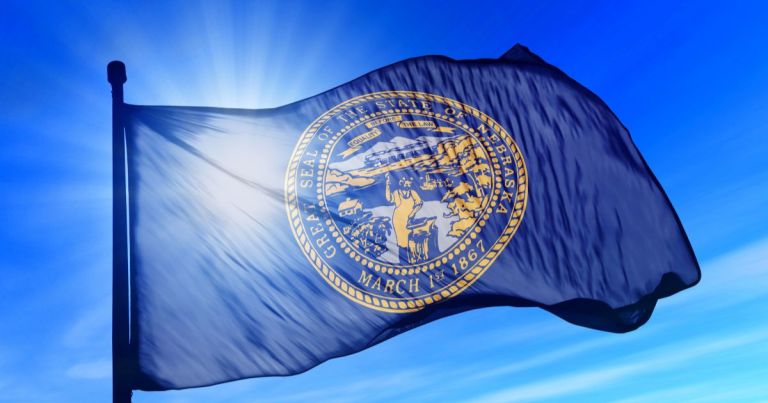
To this day, Nebraska is the only state to be admitted into the Union over a presidential veto. When Nebraska was applying to become a state during the Reconstruction era, its original constitution stated that only white men could vote. However, Congress insisted the only way to statehood was to amend the document—so that all men could vote.
Well, President Andrew Johnson vetoed this statehood bill by declining to sign it, arguing that Congress could not dictate voting requirements for an incoming state.
But Congress overrode Johnson's veto, making Nebraska the 37th state on March 1, 1867. The debate reflected many of the nation’s tensions at the time surrounding voting rights after the Civil War. This is also how the state's motto, "equality before the law," came to be. Learn more about this on the Nebraska State Historical Society's website.
2. Buffalo Bill's Rodeo Started in Nebraska

Controversy abounds over where the country's first rodeo was held, but most can agree that the most famous rodeo, Buffalo Bill's Wild West, started in Omaha, Nebraska, in 1883. The founder of the show, bison hunter and wild-west legend William F. "Buffalo Bill" Cody, took his act on the road across the state and country.
Through his showmanship, Buffalo Bill transformed frontier life to mythic status, romanticizing the rugged era and its characters. This established the classic cowboy mythos and other elements that would go on to influence rodeo culture across the nation and further. Cody even built a mansion in North Platte, Nebraska, called Scout's Rest, where he settled during the off-season. You can visit Scout's Rest—and learn more about Cody and the rodeo's beginnings—at Buffalo Bill Ranch State Historical Park in North Platte.
3. Nebraska Finished Its Interstate First

Nebraska was the first state to finish its stretch of the mainline Interstate Highway System. Interstate 80 (I-80), which stretches across the entire state from west to east, was completed in Nebraska on Oct. 19, 1974. The entire route—which runs from San Francisco, California, to Teaneck, New Jersey—was completed in 1986.
4. Arbor Day Started in Nebraska

Nebraska’s innovations didn’t stop with transportation. In 1872, a Nebraska newspaper editor, J. Sterling Morton, proposed the idea of Arbor Day. Why so? Settlers on the barren plains of Nebraska found themselves in desperate need of trees for building materials, fuel, and to stop soil erosion due to wind. It was a move that would go on to have a widespread impact, especially when other states began adopting the holiday.
Arbor Day was proclaimed an official Nebraska holiday on April 10, 1872—a day when one million trees were planted across the state. Now, the holiday is observed nationwide on various dates in April and is celebrated by planting trees in the spring. The Arbor Day Foundation, an organization that continues to inspire people to plant and nurture trees where they are needed most, is still headquartered in Nebraska to this day.
5. Nebraska Created the First Unicameral Legislature

Fascinated by Nebraska history facts? Unlike every other state, Nebraska's state legislature is only composed of one house, not two. This is known as a unicameral model, which was instituted by former senator George Norris after returning home from a trip to Australia in 1931 (where he observed the model in action).
Norris believed this unicameral model would be more effective in terms of efficiency and cost, and that removing party labels from the ballot would encourage people to vote based on the integrity of the bill rather than being affected by party loyalties.
The constitutional amendment was approved in 1934 and took effect with the 1936 election. Perhaps one of the most unique inventions from Nebraska, there continue to be no official political parties within the Nebraska Legislature.
6. Nebraska Was the First State to Have All-Female Candidates for Governor

The Cornhusker State sure can post a lot of political achievements. In the 1986 gubernatorial election, Kay Orr and Helen Boosalis became the first women to run against each other for the seat of governor. Kay Orr won, becoming Nebraska's first (and, to date, only) female governor. Learn more about Gov. Orr on the National Governors' Association website.
7. Nebraska Is Home to the Country's First Straw Bale Church

Want some more Nebraska historical facts? It's also home to the 100-year-old straw bale church in Arthur, which is thought to be the first of its kind in the country—and the only one remaining. Other structures—like schools and even houses—were built from hay bales in the first part of the 20th century, as well. Not only is straw durable, but it's also a sustainable and eco-friendly alternative building material.
8. Nebraska Was the First State to Digitize Its Homestead Records

Nebraska was the first state to digitize its homestead records. History buffs rejoiced in 2014 when the entire collection of original records was finally safely preserved. Approximately 76,000 homestead files and some 1.6 million images were digitized to preserve the state's rich history of homesteaders. Even today, Nebraska continues to be a leader in digital archiving. Search the records for yourself on the University of Nebraska website.
9. Jewish American Heritage Month Was Inaugurated Here

You might not realize it, but Arbor Day isn't the only celebration invented here. In 2022, Nebraska Governor Pete Ricketts inaugurated May as Jewish American Heritage Month—the first U.S. state to do so. (The first national proclamation of the observance was in May 2006 under President George Bush.) Learn more about this important month and all the celebrations that come with it, like live music and talks, festivals, and more, by visiting the Jewish American Heritage Month’s website.
10. Nebraska Is Home to the First Single-Car Line Museum

While this iconic museum (and its fantastic collectibles) is closed, Chevyland USA's owner, Monte Hollertz, put Nebraska on the map for having the first museum dedicated to a single car line. The Chevrolet-themed museum opened in Elm Creek in the early 1970s. You can still enjoy automotive history in the Cornhusker State, though, at the Corvair Museum of America in Hastings and the Museum of American Speed in Lincoln.
The Cornhusker State has had many contributions over the years. It's birthed loads of famous people, dozens of iconic Nebraska foods, and there are plenty of inventions from Nebraska, as well. No wonder we're so flooded with Nebraska state pride. You just never know what our great state might contribute next!
Did you know about these famous things from Nebraska? If you're hungry for unique Nebraska landmarks or shocking Nebraska facts, consider planning a trip to The Cornhusker State. You're sure to impress us with your newfound knowledge of Nebraska fun facts.
Subscribe to our newsletter
Get the latest updates and news
Thank you for subscribing!