Take A Stroll Through Alabama’s Past At The Capital’s US Civil Rights Trail Sites
While there are many of the US Civil Rights Trail sites in Montgomery, Alabama, we've put together a walkable course to see many of the most visited among them. The entire course only covers about 2.5 miles, and yet I recommend at least a weekend-long stay. Most of the sites offer their own immersive exhibits and property tours that you'll want ample time to experience.
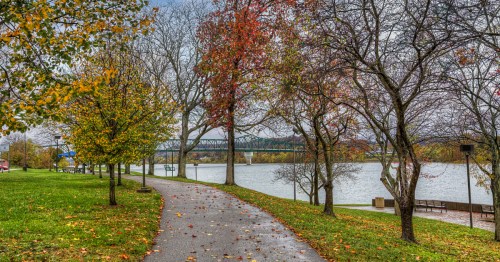
Start your journey near Riverfront Park at The Legacy Center, a museum the Equal Justice Initiative established in 2018. The center interprets America's history of racial inequality from the earliest days of the slave trade to modern-era issues that endure.
From The Legacy Museum, go south almost a half mile to Court Square, which was once the center of the city's slave trade.
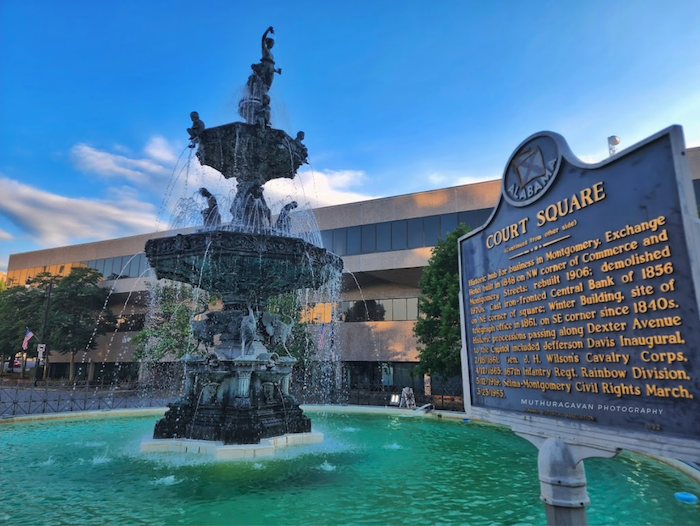
The fountain at the center of the square dates to 1885 and is situated over a long-running artesian well. While most of the buildings that surrounded the square are gone, a marker denotes the many significant events throughout history that occurred in this spot.
In fact, Court Square is the bus stop where Rosa Parks boarded a ride during which she refused to give up her seat to a white passenger in 1955. Her refusal violated Montgomery law at the time, which prompted her arrest about a half mile southwest. At that site stands the Rosa Parks Museum. To get there from Court Square, you'll go two blocks southwest down Montgomery Street.

The stretch from the bus stop site to the next destination is half a mile, so we recommend you stop halfway for a bite to eat at Chris' Hot Dogs. The restaurant opened in 1917 and is the city's oldest family-owned restaurant.
As you proceed east, you will see the state capitol in the distance. Just before you reach it, you will arrive at Dexter Avenue King Memorial Baptist Church.

Dr. Martin Luther King Jr. led the Dexter Avenue King Memorial Baptist Church as pastor from 1954 to 1960. He assumed his position there at age 25 and ultimately led millions more people beyond just his congregation. That level of leadership began in the four days that followed Rosa Parks' arrest. It was during that time that King and others convented at his church to organize the Montgomery Bus Boycott, which began December 5, 1955.

The boycott was the first major demonstration against segregation and lasted just over one year. Five days before Christmas in 1956, the US Supreme Court backed a lower court's summer ruling that segregation violates the Fourteenth Amendment.
The church is preserved and appears much the same as it did during King's time there. You will have the opportunity to learn even more about his life and legacy later in this tour.

But first, you'll keep moving just a block south to Washington Avenue, where you'll find the Civil Rights Memorial Center. The center is open from 9 a.m. to 5 p.m. week days and opens one hour later on Saturdays. The center features many powerful exhibits and educational programming.

Outside, you'll experience the most beautiful and emotionally gripping aspect of the site, which is the Civil Rights Memorial itself. Vietnam Memorial creator Maya Lin designed the black granite memorial. The structure includes the names of people who died during the fight for equality in the period from 1954 to 1968.

To reach the next site on this tour, the Dexter Parsonage Museum, you will depart from the Civil Rights Memorial Center and go south to the end of the block to Adams Avenue. There, you'll go four blocks east to South Jackson, and then about two blocks south.

At that point, you will find the home of Dr. King during his time as pastor of Dexter Avenue King Memorial Baptist Church. The parsonage looks as it did during the time the King family resided there and has an interpretive center next door.
To reach the final stop on this tour, go back north from the parsonage to Adams Avenue, then take it one mile back east to South Court Street to the Freedom Rides Museum.

Restoration experts returned this historic bus station to its appearance in May 1961, when young volunteers who called themselves Freedom Riders arrived and endured a violent attack. The riders were part of a group called the Student Nonviolent Coordinating Committee, whose members challenged segregation in bus terminals and interstate travel. The events of that day brought definitive support from the federal government, which Dr. King called a turning point in the greater civil rights struggle. Going north two blocks from the Freedom Rides Museum will return you to where you began at Court Square.
See the official website for more US Civil Rights Trail sites in Montgomery, as well as many other historic places that are not officially designated on the national trail. Let us know if you make a visit to Montgomery to experience them and share tips if you already have.
If you're considering staying overnight or longer, do not miss the Trilogy Hotel, which opened in early 2023 within the heart of the historic district. The hotel property blends modern trends and honors the past throughout its historic structures – two warehouses from the early 1900s and a mansion built in 1851.
Subscribe to our newsletter
Get the latest updates and news
Thank you for subscribing!