I Skipped the Mountain Trail and Found Something Better Right in Seattle
Looking for a trail that combines stunning views with powerful history? This gorgeous urban walk evokes the resilience and vision of Seattleites.
When planning our next outdoor adventure, we Washingtonians tend to set our sights high. And why not? Whether you hail from the west or east side of the Cascades, our views are usually shaped by mountains. If we hit local trails as a hobby—and a few of us won't at least claim it's one of our favorite ways to spend a weekend—alpine hikes naturally become the goal, their views a reward for months of breaking in new boots on flatter terrain.
Over the years, I've given this hiking hierarchy a rethink. While I still believe in getting out into Washington's breathtaking wilderness, these days, I'm just as likely to recommend a nearby urban jaunt. Few backyard excursions have surprised me more than Seattle's Kubota Garden—an oasis of beauty and a powerful historical site of human resilience and creativity.
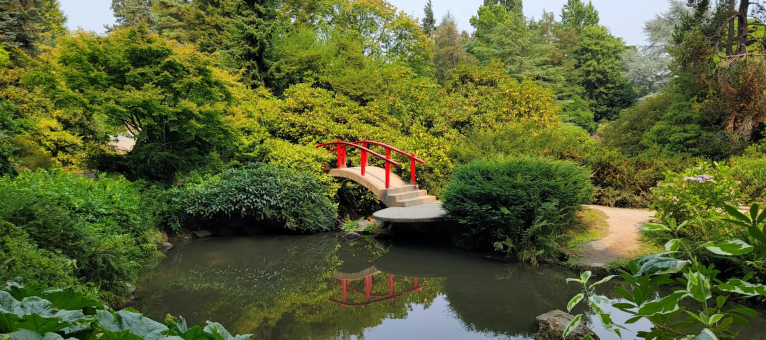
Hidden in Seattle's Rainier neighborhood, Kubota Garden is all too often overlooked in favor of the city's other stunning Japanese garden, tucked within the more centrally located Washington Park Arboretum. Still, if you're willing to stray just slightly from the well-trodden path, you'll discover a jewel of landscape design—its unique plants lovingly cared for and thoughtfully arranged so the space feels far larger than its 20-acre footprint.

There are other plus sides to visiting Kubota, too. Unlike the arboretum's Japanese garden, wandering along Kubota's one-and-a-half-mile trail is free of charge. Leashed pets are also welcome, ensuring the outing can include all family members—furry and otherwise.
Then there's the garden's real surprise: its history. It is a story that only deepens its beauty. Though Kubota officially opened in 1987, 27 years after the arboretum's Japanese garden debuted to the public, its first plantings began taking root 30 years before its sister park was even sketched on paper. The garden was named for its creator, visionary landscape designer Fujitaro Kubota, who immigrated to Seattle from Shikoku, Japan, in 1907. His talents blossomed into a thriving gardening business, with other notable projects including the Japanese garden at Bainbridge Island's Bloedel Reserve and gardens at Seattle University.

Still, Kubota's prodigious contributions to Seattle's parks weren't enough to protect him from the paranoia of World War II. Through a sweeping executive order, around 13,000 Japanese Americans in Washington State, and 120,000 nationwide, were unjustly forced from their homes and communities by President Franklin D. Roosevelt and sent to prison camps, regardless of their citizenship status and usually without any evidence of wrongdoing. Kubota and his family were detained at Camp Minidoka in Idaho for three long years.
Despite his circumstances, Kubota maintained his passion for gardening, even supervising the design of a local park. When they were finally released, Kubota and his family returned to Seattle to rebuild their business and restore the garden he'd nurtured so carefully.
The Kubotas' profound resilience, courage, and creativity reflect those of countless other Japanese American families during this time, who were left to remake and reimagine their lives after years of unjustifiable imprisonment. I recommend visiting the Japanese American Exclusion Memorial on Bainbridge Island to learn more about this chapter of our country's history.

If you're in the Seattle area and not quite up for a trudge in the mountains, plan a visit to Kubota Garden, nestled in the Rainier neighborhood. Not only will the spot's beauty surprise you, but its story will too, providing an illuminating example of injustice and the human spirit's ability to shine through and persist beyond our nation's darkest chapters.
Subscribe to our newsletter
Get the latest updates and news
Thank you for subscribing!