12 Must-Visit National Parks for U.S. History Buffs
Explore 12 national parks where American history meets stunning scenery. Perfect spring destinations for 2026 travel planning.
As the United States gets ready to celebrate its 250th anniversary, 2026 is a great time to reflect on the landscapes and histories on which our country was built. I don't think there's a better way to do this than to pay homage to some of the amazing national parks in the U.S. While there are plenty of monuments and museums dedicated to specific periods in our nation's history—all wonderful in their own right—these designated national parks ("America's best idea") offer a different kind of historical experience. They're our nation’s greatest living museums, where cultural heritage, ancient traditions, and natural beauty meld together.
As the weather warms up and the anniversary approaches, it’s the perfect time to hit the road and see some of these parks in person. As part of an epic road trip or just a quick spring getaway, these historic national parks in the U.S. bring the past to life in ways that no textbook can.
1. Yellowstone National Park - Wyoming/Montana/Idaho
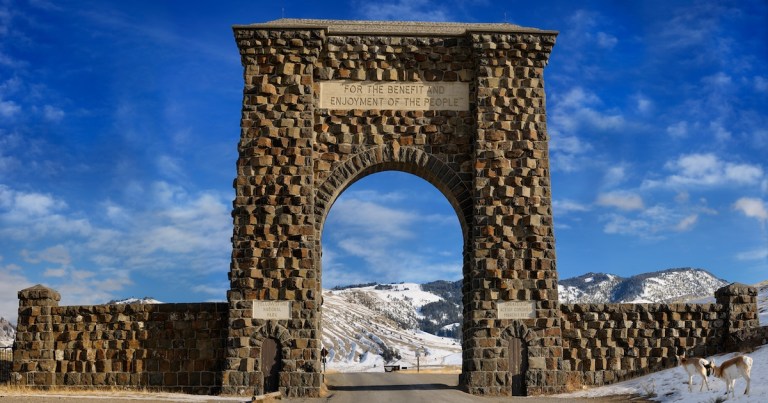
When discussing historic national parks, you can't skip the one that started it all. When it was established in 1872, Yellowstone became the world’s first designated national park. The human history here, however, extends back more than 11,000 years. At least two dozen Native American tribes, including the Shoshone, Bannock, and Tukudika, lived in the area, using the wide valleys for hunting, gathering, and trade long before it opened as a park. Parts of the park, such as Obsidian Cliff, memorialize this long history. Spring is a spectacular time to visit: the snow recedes, and bison calves take their first wobbly steps. Be sure to check for seasonal road openings on the official National Park Service website before your visit.
2. Mesa Verde National Park - Colorado

Mesa Verde National Park was designated to preserve the visually stunning cliff dwellings of the Ancestral Pueblo people. The people who lived here thrived on the mesa tops for more than 700 years and, during that time, constructed entire stone villages like Cliff Palace within the canyon walls. A walk through this park offers a chance to reflect on the Native peoples who built these remarkable structures and what their daily lives must have been like. Spring is a good time to visit, as the milder temperatures make it easier to explore the mesa trails before the intense summer heat arrives.
3. Voyageurs National Park - Minnesota

If you appreciate tranquility, the deep forests and interconnected lakes of Voyageurs National Park will not disappoint. One of the least-visited national parks outside Alaska, this rugged landscape near the Canadian border has a rich history dating back to the French-Canadian fur traders for whom the park was named. Long before the fur trade, the Anishinaabe (Ojibwe) people lived along these waterways, relying on the abundant wild rice for their communities, and the park celebrates the rich human history of this ancient landscape. Since the park is largely water-based, exploring it by boat or canoe is the best way to experience it. If you love the night sky, the park is renowned for its world-class stargazing.
4. Dry Tortugas National Park - Florida

Remote Dry Tortugas National Park is located about 70 miles off the coast of Key West, Florida, and is perfect for visitors interested in U.S. military history. The park centers around Fort Jefferson, a massive, unfinished 19th-century fort built from millions of red bricks. (In fact, it's the largest brick masonry structure in the western hemisphere.) The fort served as a naval base and a Civil War-era prison. Today, it's home to rich marine and bird life, and warm spring days are ideal for snorkeling the park's reefs. Note: You can only reach this national park in Florida by seaplane or ferry.
5. Yosemite National Park - California

John Muir was famously awestruck when he first caught a glimpse of the Yosemite Valley's towering granite cliffs and ancient sequoia groves. Today, Yosemite National Park's striking beauty still leaves visitors in awe, but the valley's history is just as significant. Originally called Ahwahnee, this breathtaking landscape was carefully managed by the Ahwahnechee people for generations through practices like controlled burns before they were forcibly removed. After lobbying by Muir and other lovers of the valley, President Abraham Lincoln signed the Yosemite Grant in 1864, a piece of legislation that laid the groundwork for what would become the national park system. If you love the many rugged national parks across America, Yosemite is a must-visit. Spring is an especially good time, because the melting snowpack feeds the roaring waterfalls that echo throughout the valley.
6. Mammoth Cave National Park - Kentucky

Taking a historic lantern tour deep underground in Kentucky is a haunting yet unforgettable experience where history and geology meet. Mammoth Cave National Park is home to the longest known cave system in the world, and its human history is also extensive. Thousands of years ago, ancient Indigenous peoples navigated miles into the dark caverns to mine minerals—long before saltpeter miners arrived during the War of 1812. After you explore the underground passages, enjoy a lovely spring afternoon hiking the park's many surface trails.
7. Isle Royale National Park - Michigan

Surrounded by the chilly waters of Lake Superior, Isle Royale National Park feels completely removed from modern life. Known as Minong, or "the good place," to the Anishinaabe (Ojibwe) people, the island has a fascinating history of ancient copper mining that predates European contact by thousands of years, as well as a more modern legacy of 19th-century commercial fishing. Since it's open seasonally (April through October) and can only be reached by boat or seaplane, it's one of the least-visited national parks in the country. After the park opens in mid-April, early visitors will experience a quiet retreat where moose roam freely through the budding birch forests.
8. Great Smoky Mountains National Park - Tennessee/North Carolina

Great Smoky Mountains National Park's eponymous range is famous for the blue mist that hangs over the ancient peaks. The region is the ancestral homeland of the Cherokee, who call the mountains Shaconage—the "place of the blue smoke." Today, the park acts as an open-air museum, preserving numerous log cabins, barns, and grist mills that tell the stories of early pioneers. The area is also home to some of the most beautiful scenic drives in the nation, so you can enjoy the region's historical landscape as you travel through it. Famous for its stunning blankets of wildflowers and incredible synchronous fireflies, the park really shines in the spring.
9. Grand Canyon National Park - Arizona

Nothing quite prepares you for the experience of standing on the rim of the Grand Canyon and looking out across layers upon layers of multi-colored rock that stretch to the horizon. A geological marvel that lays bare billions of years of Earth's history, the canyon also carries a powerful human story. For thousands of years, tribes like the Havasupai, Hopi, Hualapai, Navajo, and Zuni have called the massive canyon—and the land surrounding it—home. Their sacred stories are intertwined with the landscape and are evident in many of the park's features, such as the Tusayan Ruin. If you're curious about the best national parks to visit by month, you'll be pleased to learn that spring is ideal for a visit to Grand Canyon National Park. The mild temperatures are perfect for hiking into the canyon before the summer heat arrives.
10. Acadia National Park - Maine

Acadia National Park stands as a monument to the rugged coastal beauty of the Northeast, where its rocky, forested shorelines meet the Atlantic. The Wabanaki Confederacy and its ancestors have inhabited this land for more than 10,000 years, and the coastal resources of Mount Desert Island remain significant to their culture. The area's later history is linked to wealthy philanthropists like John D. Rockefeller, Jr., who financed and designed the park's rustic carriage roads. A spring visit means peaceful hikes through the park and quiet drives through the quaint towns nearby—before the mosquitoes and summer crowds arrive.
11. Everglades National Park - Florida

The creation of Everglades National Park marked a change in how Americans view conservation. After targeted lobbying by groups seeking to stop the hunting of migratory birds for their feathers, the park was the first national park created specifically to protect a fragile ecosystem rather than merely to preserve its scenic beauty. For generations, the slow-moving "River of Grass" supported the Calusa people, and later, the Seminole and Miccosukee tribes, who were removed to the area. It provided a vital sanctuary that these Indigenous peoples learned to navigate expertly, and where many still live to this day. Spring marks the end of the dry season, and falling water levels force wildlife to gather near the remaining water holes. This makes it a prime season for visiting to see alligators, manatees, and large flocks of wading birds.
12. Olympic National Park - Washington

Created in part by President Franklin D. Roosevelt to protect the native herds of Roosevelt elk, Olympic National Park is a lesson in ecological diversity, from glacier-capped mountains and a rugged Pacific coastline to ancient, moss-draped temperate rainforests. These landscapes have been cared for since ancient times by Native peoples, including the Makah and Quinault nations, who maintain deep-seated cultural and fishing traditions on the Olympic Peninsula today. Thanks to frequent spring rains, the entire ecosystem bursts into a brilliant, lush green, and places like the Hoh Rain Forest can feel otherworldly to visit this time of year.
As we look forward to the U.S.'s 250th anniversary in 2026, these parks remind us of our shared, complex heritage. They offer us a rare chance to walk through chapters of American history while enjoying unparalleled natural scenery. If you can, I encourage you to visit more than one of these parks this year. Grab your America the Beautiful Pass, hit the road, and explore the rich, living history that these remarkable landscapes protect.
Subscribe to our newsletter
Get the latest updates and news
Thank you for subscribing!