Thousands of “Ancient-Looking” Birds Have Been Spotted On North Carolina’s Outer Banks
Every year folks can catch sight of some "ancient-looking" birds on Outer Banks North Carolina. The Atlantic coast is a primary migration route for the interesting double-crested cormorants which when flying in a group is called a gulp. According to the staff at Cape Hatteras National Seashore who spotted them in late November, the area offers plenty of fish and a mild climate for these birds who usually eat about one pound of fish daily. The highest counts are often from North Carolina waters, especially in the vicinity of Hatteras and Ocracoke inlets, as reported by the Carolina Bird Club.
This double-crested cormorant elegantly takes off in flight, which requires a running start.
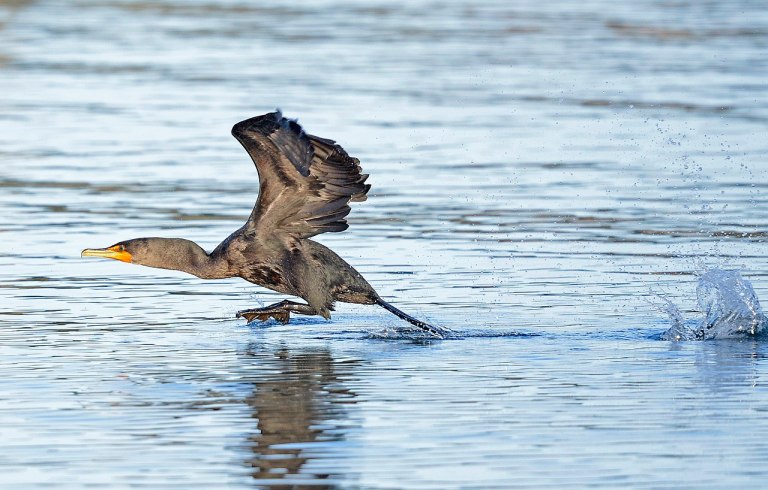
Hardly any bird in North Carolina has increased in recent decades as dramatically as this one, according to the Carolina Bird Club.

Gulps of 10,000 or more can be spotted in the winter at Hatteras and Ocracoke inlets.

These portraits were taken at South Point on Ocracoke Island, one of the most popular shelling and fishing spots.
Their vast population is also spotted wintering at other popular North Carolina coastal spots.

Additional wildlife has also increased on the Cape Hatteras National Seashore.

This tiny leatherback sea turtle bravely entered the ocean in late August, and a new nest was laid by a Green sea turtle on Oct. 29, 2023, marking a tie with last year's second-most active nesting season with 379 nests laid!
With "ancient-looking" birds, turtles, and lighthouses, it's always a good time to visit Cape Hatteras National Seashore.

For more information about these "ancient-looking" birds on Outer Banks North Carolina, visit the Carolina Bird Club website. Also, check out the posts on the Cape Hatteras National Seashore Facebook page.
And from artwork to stickers and greeting cards, find some double-crested cormorant products on Etsy.
Subscribe to our newsletter
Get the latest updates and news
Thank you for subscribing!