This Marvelous 8.5-Mile Trail in Minnesota Leads Adventurers to a Little-Known Historic Site and Overlook
The Grand Portage Trail in Minnesota offers a scenic hike rich in natural beauty and historical significance.
A trek along the 8.5-mile Grand Portage Trail in Minnesota is a marvelous hiking adventure that rewards you with both stunning natural beauty and a trip back in time to the area’s human history. The trail is the namesake of the national monument, a state park, and the community of the Grand Portage Band of Lake Superior Chippewa whose land the portage trail bisects. This is definitely one of our favorite day hikes in Minnesota (you can even turn it into a longer trek with an overnight or two, if you prefer), and its fascinating history elevates it above many other trails in Minnesota.
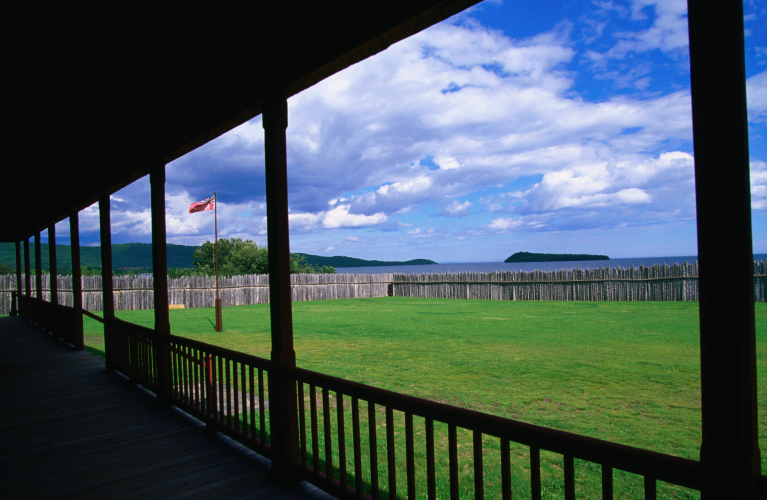
Today, the Grand Portage - or Gichi Onigamiing (“great carrying place”) in Anishinaabemowin - begins at the national monument of the same name on Lake Superior in the community of Grand Portage, Minnesota. The trail was long used by Native American peoples of the area and, later, by fur trading voyageurs who made the overland trek from Fort Charlotte on the Pigeon River along the Canadian border to the Northwest Company outpost on Lake Superior that was located where the national monument stands today.

The entire trail is now part of Grand Portage National Monument. The monument, itself, is a joint venture between the National Park Service and the Grand Portage Band. The first portion of the trail gains several hundred feet of elevation, as it traverses the rugged hills above Lake Superior. So, you can see why navigating these hills was a challenge for generations of Native Americans and fur traders. I can't imagine carrying heavy, wooden canoes and all the cargo with which they were laden over this trail - can you?

The second portion of the trail negotiates marshes, bogs, and swamps in the uplands. Those who wish to avoid one section of the trail or the other may start at a trailhead off of old Highway 61. This is the approximate midpoint of the trail. To help you negotiate the wetlands, the Park Service has installed boardwalks, as well as bridges.
The trail ends at the Pigeon River, which now demarcates the border between Minnesota (i.e., the United States) and Canada. Downstream of this point, the river tumbles over and across a series of rapids and waterfalls, including 100-plus-foot High Falls, as it makes its way toward Lake Superior. Hence the need to make the Grand Portage.

Fort Charlotte, a fur trading outpost built in 1789, used to stand on the site. Where the trail meets the river. Today, all you’ll find there is a campsite with two tent platforms and steps down to a canoe landing on the Pigeon River. However, a sense of history and wonder continues to pervade this site and the entire Grand Portage Trail.

Be sure to spend some time at the national monument's visitor center to learn more about the area’s history. Afterward, head up toward Grand Portage State Park, and hike to the Pigeon River’s High Falls to get a glimpse of what the Grand Portage sought to avoid. Cell phone service is spotty at best in this part of the world, so I definitely recommend downloading or printing a trail map from AllTrails+ to have for backup, as well as for offline navigation on your smartphone.
Have you hiked the Grand Portage Trail in Minnesota? What other trails make for marvelous Minnesota hiking adventures? We'd love to hear your recommendations.
Be sure to take advantage of your time in this part of the Land of 10,000 Lakes and set aside a day to explore the incredible Gunflint Trail. It's an amazing adventure any time of year!

Subscribe to our newsletter
Get the latest updates and news
Thank you for subscribing!