I Found Ice Age Mammoths in Kentucky (Not Where You’d Expect)
Visit Big Bone Lick Park for some fascinating prehistoric artifacts.
Big Bone Lick State Park in Union, Kentucky, might just have the most unforgettable name in the state. But it’s what lies beneath the surface that makes this place truly remarkable. Known as the “Birthplace of American Vertebrate Paleontology,” this park is a fossil lover’s dream and one of the most fascinating spots for discovering prehistoric treasures in the region. If you’re someone who feels the pull of ancient history or loves a good, hands-on adventure, this is one trail that absolutely answers the call.
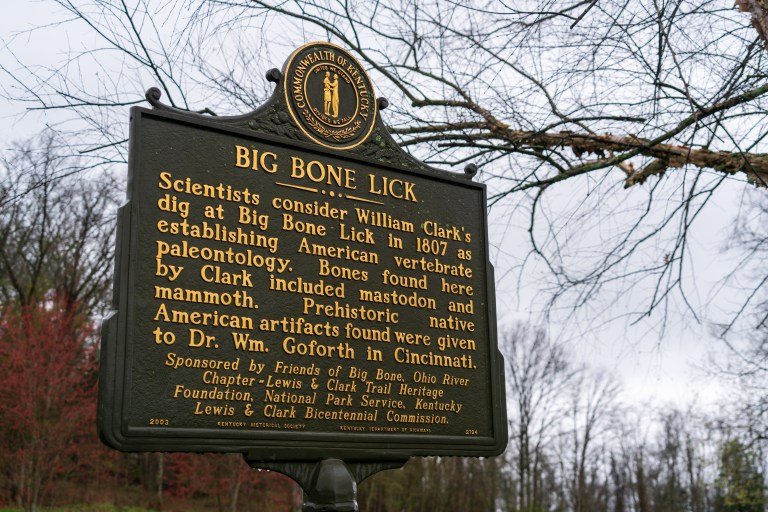
Big Bone Lick State Park sits on a natural salt lick, mineral-rich springs that attracted wildlife for tens of thousands of years. During the Ice Age, massive herbivores like mastodons, mammoths, giant ground sloths, and bison frequented the area to drink and feed, often becoming trapped in the soft, swampy terrain. Their remains were preserved in the sediment and, over time, created a rich fossil bed that remains a treasure trove for paleontologists.
In the 1700s, early French-Canadian soldiers and European settlers began discovering large bones in the area and sent word to the scientific community. One of the most significant turning points came in the early 1800s, when President Thomas Jefferson took a personal interest in the site. He directed famed explorers Meriwether Lewis and William Clark to collect fossils from Big Bone Lick during their 1807 expedition, evidence of just how curious early Americans were about this mysterious and ancient landscape.

The fossils collected from Big Bone Lick played a crucial role in helping scientists understand extinct megafauna and the prehistoric ecology of North America. It was one of the first places in the country where scientists began to seriously study and document vertebrate fossils, leading to broader inquiries about extinction, evolution, and Earth’s deep history.
Today, the park honors that legacy with educational trails, a modern visitor center, and a museum that houses casts and specimens from major fossil discoveries. Visitors can see life-size replicas of Ice Age mammals, read about the early excavation efforts, and explore interactive exhibits detailing the geology and paleontology of the region. While fossil collecting is no longer allowed due to preservation laws, the park’s fossil-rich soil and history are on full display.

In addition to the historical and scientific appeal, Big Bone Lick offers an immersive natural experience with its bison herd, interpretive hiking trails, and family-friendly programs. The Big Bone Creek Trail is an easy 0.8-mile hike that's especially popular for self-guided fossil education, offering scenic views of the salt springs and storytelling signage that brings the ancient past to life.
If you want to spend more time at the park, there are plenty of other activities. Hike, bike, camp, spot wildlife like bison and birds, or play mini golf or tennis on the massive property. Reserve a campsite here—pricing varies by date and time. The park is both wheelchair and stroller accessible, making it perfect for family outings.
So if you're looking to dive into a ton of history, paired with some epic historical fossil discovery, this is the park for you. Come for the science, the scenery, or just to say you've visited the most prehistoric-sounding park in Kentucky. Big Bone Lick is a true hidden gem, one that tells the story of ancient giants, natural wonder, and the roots of American science.
Subscribe to our newsletter
Get the latest updates and news
Thank you for subscribing!