A ‘Planetary Parade’ May Be Visible In June Across America… If You Wake Up Early
The first five months of 2024 have been pretty stellar for stargazers and space nerds like me. Between the total solar eclipse in April and the stunning auroras produced by a massive solar flare in May, we’ve already had two unique opportunities to marvel at the beauty of the universe this year… and there’s another one coming up in early June, but you’ll have to wake up early if you want to see it.
In the early morning hours of June 3, 2024, six planets will align in the sky in what’s affectionately called a “planetary parade.”
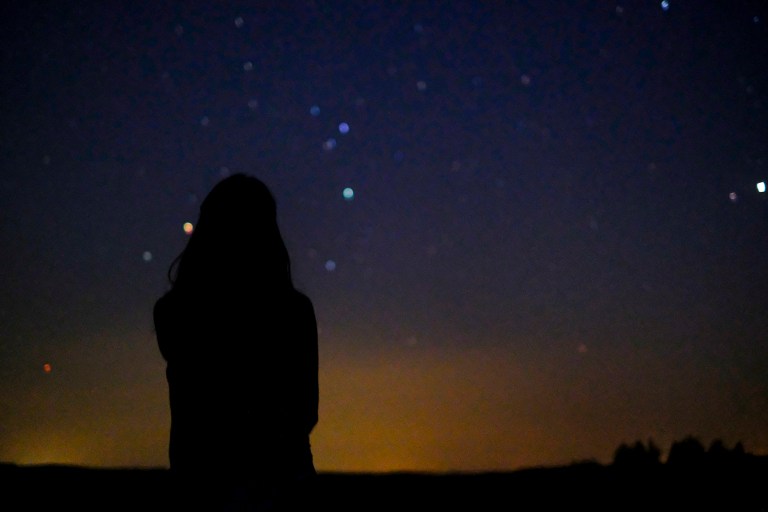
While four of them – Mercury, Mars, Jupiter, and Saturn – may be visible with the naked eye, you’ll need a telescope to spot Neptune and Uranus.
Unfortunately, this particular “parade” won’t be as bright as alignments we’ve seen in years past (like the photo below, which was snapped in 2022), but if you’re an early riser and conditions are clear, you might still spot something special.

Planetary alignments are largely a visual phenomenon based on our perspective here on Earth. In reality, these planets are billions of miles apart in three-dimensional space and travel around the sun in elliptical orbits that never truly line up. That said, it’s still pretty fun to see!
So what should you look for if you are willing to wake up before the break of dawn?

The best chance you’ll have to see this planetary alignment will be about a half-hour before sunrise. The depiction above comes from Stellarium and shows the positions of the visible planets and expected lighting conditions for the morning of June 3rd. If you live in an area with an unobstructed view to the east, Jupiter and Mercury will appear closest to each other and to the horizon. The sunrise isn’t far behind them, so they’ll be quite dim. From there, the other planets will be positioned in an upward arc from north to south.
Uranus is third in the line-up, but you won’t be able to see it without a telescope. If you live near an observatory or know of local astronomy groups, check to see if they’re hosting any viewing events!
A crescent moon will be visible in the center of the six planets, though not perfectly in alignment.

It may, however, help you locate Mars, which is fourth in the line-up. Our neighboring planet is often one of the easiest to find in the night sky due to its red hue. The color may be less obvious in the early morning light, but it will still be one of the brighter planets and may help you orient yourself to spot the others.
Fifth in line is Neptune – and you’ll just have to trust me that it’s there. Like Uranus, the planet will be too dim to see with the naked eye.
Finally, Saturn will sit highest in the sky and furthest to the south. Along with Mars, it will be one of the easier planets to see.

Keep in mind that the planets will not be clustered as close together as you might think – the alignment will stretch across a large swath of the sky – about 73° for those who like the nitty-gritty details.
While you may see some splashy headlines about this “rare” and “spectacular” event, the truth is that planetary alignments are not terribly unusual; however, seeing six of the eight (or unofficially nine, if you – like me – will always have a soft spot in your heart for Pluto) is a little less common.

In fact, this won’t be the only six-planet “parade” of 2024 – there’s another one coming up in August that may yield better viewing conditions.
I fell in love with astronomy back in middle school when an awesome teacher taught me a trick for spotting the brightest stars in the sky (anyone out there recognize the phrase “arc to Arcturus, speed to Spica?”) and my interest was reignited in college during a particularly cool physics course, so I'm always on the lookout for new ways to learn about our universe. If you are, too, I recommend checking out one of the many Night Sky apps out there. Stellarium is a great simulator for visualizing sky conditions from any location at specific times and dates. I’ve also used the StarWalk phone app for years to help me locate celestial objects, even if I can’t see them with my eyes alone. Both are free and are pretty cool tools for learning about constellations, star identification, and tracking the path of the ISS as it circumnavigates the globe!
So there you have it: everything you need to know about the “planetary parade” in June 2024. Here’s hoping for clear eyes and clear skies!
Were you lucky enough to see the awe-inspiring auroras in May? I never thought I’d see them so close to home! Several of our editors snapped photos from all across the country – you can see our views from Oregon, Utah, and Ohio on the OnlyInYourState Instagram page!
Subscribe to our newsletter
Get the latest updates and news
Thank you for subscribing!